Discover the Reasons You Required an Emulsifier in Food for Improved Structure and Security
Emulsifiers play a crucial role in food prep work, making sure that active ingredients combine seamlessly, especially those that typically do not mix well, such as oil and water. Their existence improves texture, security, and overall quality in a selection of cooking applications. This not only boosts the sensory experience yet additionally extends the service life of items. Recognizing their importance can cause better cooking outcomes, but exactly what makes an emulsifier essential in contemporary cuisine?
Comprehending Emulsifiers: What They Are and Just how They Function
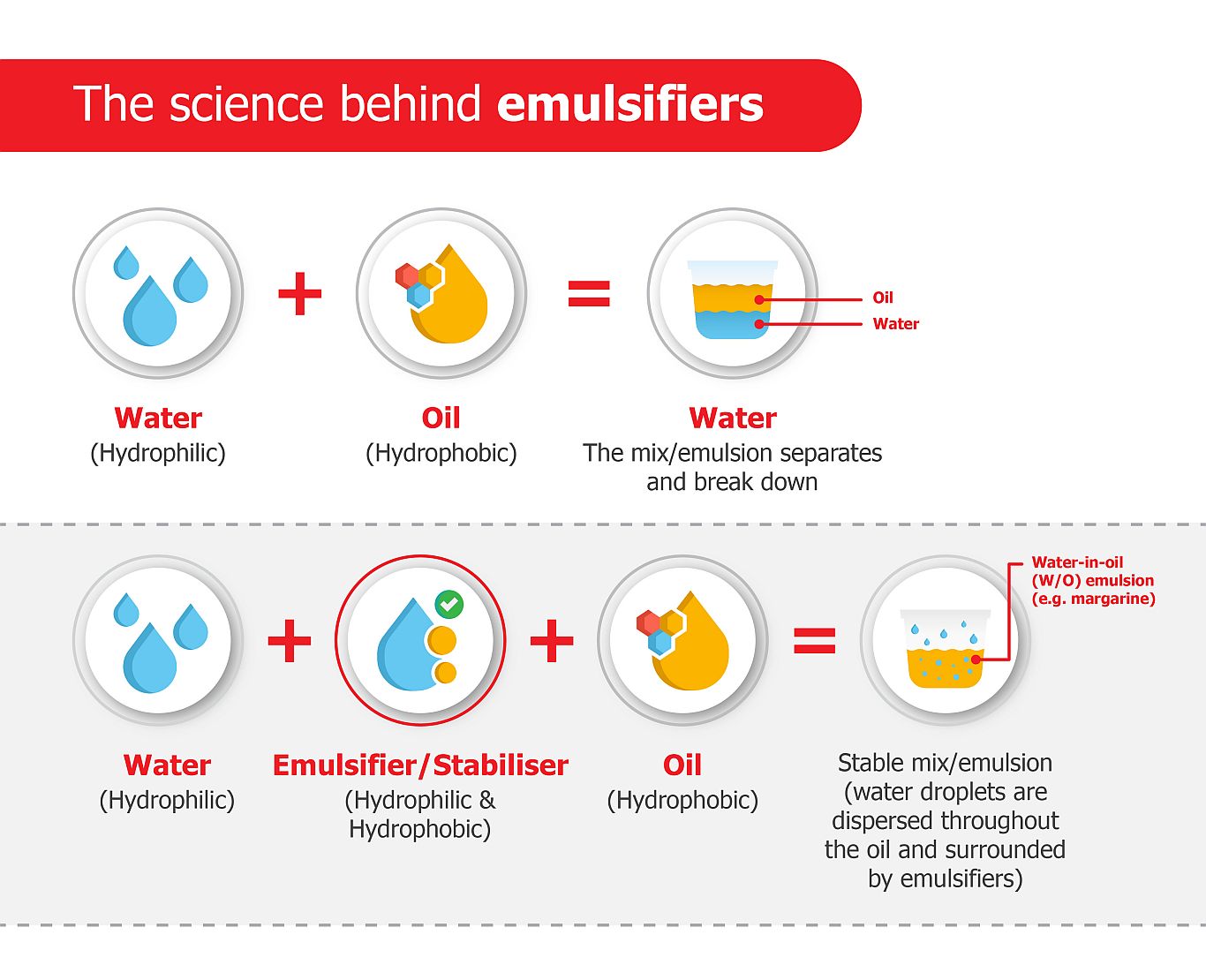
Emulsifiers play an essential role in the food market by allowing the steady mixing of components that typically do not blend, such as oil and water. These compounds, which can be natural or synthetic, consist of molecules with a hydrophilic (water-attracting) and a hydrophobic (water-repelling) end. When contributed to a blend, emulsifiers lower the surface area stress between the 2 stages, permitting them to integrate efficiently. Typical instances consist of lecithin, located in egg yolks, and mono- and diglycerides, commonly stemmed from fats.
In enhancement to improving texture and mouthfeel, emulsifiers add to the life span of products by avoiding splitting up, making certain regular top quality with time. They likewise assist in the distribution of flavors and nutrients throughout the mixture, boosting general sensory residential or commercial properties. Understanding the functionality of emulsifiers is vital for food makers seeking to develop steady, premium products that satisfy consumer assumptions.

The Duty of Emulsifiers in Salad Dressings
In salad dressings, the consolidation of emulsifiers is important for attaining an uniform appearance and stopping the separation of oil and vinegar or various other aqueous ingredients. Emulsifiers, such as lecithin or mustard, help with the mixing of immiscible elements, producing a secure emulsion. This security is crucial for both the look and mouthfeel of the clothing, enhancing the general dining experience.
When emulsifiers are utilized, salad dressings keep their uniformity and do not different, which can be unattractive to customers. The visibility of emulsifiers also enables for a smoother application on salads, ensuring even distribution of tastes. In addition, emulsifiers can boost the service life of dressings by minimizing the likelihood of separation with time. In general, the function of emulsifiers in salad dressings is essential for both aesthetic charm and functional performance, making them an essential active ingredient in the cooking world.
Enhancing Baked Product With Emulsifiers
Often forgotten, emulsifiers play a vital function in improving the structure and top quality of baked products. These components help to stabilize the mixture of fats and liquids, causing an uniform dough that promotes even baking. By boosting the dough's framework, emulsifiers add to a softer crumb and a much more soft structure, making products like cakes, muffins, and bread much more pleasurable.
Emulsifiers can extend the shelf life of baked items by minimizing staling. They keep moisture, preventing the item from ending up being dry and hard in time. On top of that, emulsifiers promote far better oygenation during blending, leading to improved quantity and agility in the final product.
Including emulsifiers makes it possible for bakers to accomplish uniformity in top quality, ensuring that each batch fulfills consumer expectations. On the whole, using emulsifiers is essential for producing baked products that are not just enticing yet also have a gratifying mouthfeel and longer freshness.
Creating Creamy Sauces: The Magic of Emulsifiers
Emulsifiers play a necessary role in the cooking world by assisting in the mixing of ingredients that generally do not mix, such as oil and water. Various sorts of emulsifiers, from lecithin to mono- and diglycerides, each add special buildings that boost the texture and security of sauces. Understanding these emulsifiers and their advantages can transform easy active ingredients into irresistibly luscious sauces.
Emulsifiers Defined Simply
The art of creating velvety sauces relies greatly on the duty of emulsifiers. Emulsifiers are substances that facilitate the blending of 2 immiscible liquids, such as oil and water, which would or else separate. By lowering the surface stress in between these liquids, emulsifiers produce a steady mix, resulting in a smooth and regular structure. Usual examples include lecithin, found in egg yolks, and mustard, both of which assistance integrate fats into sauces flawlessly. These components not just boost the mouthfeel however likewise add to the overall security of the sauce. Comprehending the function of emulsifiers is important for chefs and home cooks alike, as they are essential in accomplishing the wanted creaminess and cohesiveness in cooking creations.
Types of Emulsifiers
Different sorts of emulsifiers play vital roles in culinary applications, each offering distinct residential or commercial properties that add to the development of velvety sauces - Emulsifier In Food. Lecithin, frequently originated from egg yolks or soybeans, offers as a natural emulsifier, properly mixing oil and water. Another typical emulsifier, mustard, not just enhances flavor but likewise supports solutions due to its mucilage material. Furthermore, xanthan periodontal, a polysaccharide created by fermentation, gives enlarging and maintaining buildings, making it optimal for creamy appearances. Mono- and diglycerides, typically located in business products, promote emulsification by decreasing surface area tension in between active ingredients. Recognizing these diverse emulsifiers allows chefs to attain the wanted uniformity and mouthfeel in their sauces, improving the general eating experience
Benefits for Sauces
While developing velvety sauces may feel like an easy job, the role of emulsifiers is crucial in attaining the ideal appearance and security. Emulsifiers, such as lecithin or mustard, help with the mixing of oil and water, preventing splitting up and making certain a smooth consistency. This residential property is specifically beneficial in sauces like vinaigrettes, mayo, and creamy dressings, where an uniform texture enhances both appearance and mouthfeel. Furthermore, emulsifiers can boost the sauce's shelf-life by stabilizing components, minimizing the likelihood of spoilage. Their capacity to enhance flavor launch likewise makes recipes more enjoyable, as the fats in sauces bring and magnify preference. Eventually, incorporating emulsifiers changes average sauces into abundant, luscious thrills that raise culinary experiences.
Emulsifiers in Dairy Products Products: Accomplishing Uniformity
Emulsifiers play an essential role in milk products, making certain a stable combination of fats and water that boosts texture and mouthfeel. In products such as cream, cheese, and milk, emulsifiers help preserve consistency by preventing separation, which can result in unwanted appearances. By maintaining the emulsions, these active ingredients permit an uniform distribution of fat, resulting in a creamier and smoother product.
Usual emulsifiers made use of in dairy products consist of lecithin, mono- and diglycerides, and sodium stearoyl lactylate. These substances lower surface area stress in between fat and water, helping with a secure mix. Their visibility not just boosts the sensory experience yet also extends the rack life of dairy products by reducing splitting up throughout storage.

The Importance of Structure in Culinary Presentation
Structure plays an essential function in cooking presentation, influencing both visual allure and total eating experience. A harmonious mouthfeel can raise a meal, making it a lot more memorable and pleasurable for the customer. Additionally, uniformity in appearance warranties that assumptions are satisfied, adding to an all-round gastronomic experience.
Visual Appeal Matters
Although typically forgotten, the visual charm of food greatly influences the general dining experience. A dish's presentation can evoke feelings, boost hungers, and develop anticipation for tastes yet to be tasted. Shades, shapes, and setups contribute considerably to this visual satisfaction. Dynamic colors can boost a meal's attractiveness, making it extra inviting. Additionally, the appearances attained through using emulsifiers can develop This Site enticing contrasts, such as luscious sauces together with crisp veggies. Such mixes not just improve visual interest however additionally signal high quality and focus to information. Inevitably, a well-presented dish shows the chef's skill and creative thinking, making it most likely to leave a long lasting impact on restaurants and raise the meal to an art type.
Mouthfeel Improves Experience
A harmonious mix of appearances can substantially elevate the cooking experience, changing an easy meal right into a memorable feast. Mouthfeel plays an important function in just how food is viewed, influencing flavor perception and overall complete satisfaction. When textures are thoughtfully integrated-- such as luscious sauces wrapping up crisp vegetables or tender meats coupled with crunchy garnishes-- the sensory experience becomes a lot more complicated and interesting. Emulsifiers facilitate this interaction by maintaining read more combinations, making sure a constant mouthfeel that improves pleasure. The comparison between soft and crunchy, smooth and abrasive, captivates the taste, encouraging diners to enjoy each bite. Ultimately, attention to mouthfeel not only improves the eating experience but additionally enhances the virtuosity entailed in cooking discussion, making it a crucial aspect of food design.
Consistency Is Key
The interplay of structures in food not just heightens mouthfeel yet likewise emphasizes the importance of uniformity in culinary discussion. Consistent structure guarantees that each bite offers a foreseeable experience, important for both pleasure and fulfillment. When dishes display harmony in structure, they communicate professionalism and trust and attention to detail, boosting the overall appeal. Emulsifiers play a significant duty in accomplishing this uniformity by maintaining blends and avoiding separation, which can lead to undesirable variations. This security permits chefs to create meals that not just taste remarkable but likewise look visually appealing. Fundamentally, a harmonious texture is essential to the dining experience, as it affects assumptions of high quality and workmanship in food prep work.
Just how to Select the Right Emulsifier for Your Recipes
Exactly how can a chef identify the suitable emulsifier for a certain recipe? The choice pivots on the dish's ingredients and preferred outcome. Chefs need to take into consideration the kind of solution they intend to develop-- either oil-in-water or water-in-oil. For oil-in-water emulsions, common emulsifiers include lecithin and mono- and diglycerides, while water-in-oil emulsions might profit from beeswax or sorbitan esters.
Next, the chef has to assess the functionality needed. Some emulsifiers give stability at various temperature levels, while others boost texture or mouthfeel. Furthermore, nutritional constraints can affect the option; as an example, plant-based options like xanthan periodontal appropriate for vegan dishes.
Ultimately, evaluating various emulsifiers in little sets enables cooks to observe their effects on appearance and stability, making certain the final item meets expectations. By attentively selecting the ideal emulsifier, cooks can significantly improve their culinary creations.
Often Asked Questions
Are Emulsifiers Safe for Individuals With Allergies?
Emulsifiers can be safe for people with allergies, depending on the details emulsifier made use of. Those with allergic reactions need to constantly check ingredient labels and seek advice from with medical care specialists to stay clear of potential sensitive reactions.
Can Emulsifiers Impact the Nutritional Value of Food?
Emulsifiers can influence the nutritional value of food, potentially altering the absorption of nutrients (Emulsifier In Food). Nevertheless, the level of this influence differs relying on the kind of emulsifier used and the total food make-up
Just How Do Emulsifiers Impact Food Rack Life?
Emulsifiers can improve food life span by supporting combinations, preventing splitting up and oxidation. This causes longer-lasting products, as emulsifiers help keep consistent texture and taste, thereby minimizing spoilage and expanding usability.
Are There Natural Alternatives to Synthetic Emulsifiers?
Yes, there are all-natural alternatives to artificial emulsifiers. Components like lecithin from eggs or soy, starches, Your Domain Name and certain gum tissues can efficiently stabilize emulsions while supplying a much more wholesome alternative for customers seeking healthy food items.
Do Emulsifiers Modify the Preference of Food Products?
Emulsifiers generally do not change the taste of food considerably. Their key duty is to improve appearance and stability, permitting tastes to stay intact while improving overall mouthfeel and consistency in various culinary applications.
Usually neglected, emulsifiers play a crucial role in improving the structure and quality of baked products. Various types of emulsifiers, from lecithin to mono- and diglycerides, each contribute one-of-a-kind buildings that improve the structure and stability of sauces. Emulsifiers play an important duty in milk items, making certain a stable blend of fats and water that boosts structure and mouthfeel. Some emulsifiers supply security at numerous temperatures, while others improve structure or mouthfeel. Emulsifiers can be safe for individuals with allergies, depending on the particular emulsifier utilized.